The era of the predictable, one-way lead generation funnel is officially over.
Buyers these days don’t want to be pushed towards a sale — they want interactive content experiences. In fact, 91% of B2B buyers say they prefer interactive and visual content over static content. Still, many brands depend on outdated PDFs, whitepapers, and one-way emails.
If your content doesn't talk back, you're losing the conversation.
This is where an interactive content funnel can help. Traditional marketing funnels push the content in one direction, but an interactive funnel ensures that a prospect gets a two-way experience.
This article breaks down what an interactive content funnel is, how it works, and best practices for building your own.
What is an interactive content funnel?
An interactive content funnel is a marketing framework that replaces static content at each stage of the buyer's journey with interactive experiences, like digital brochures, quizzes, products, tours, or calculators.
The key differences between the two funnels are:
- One-way vs. two-way: The traditional funnel included pushing the content toward the prospect. For example, download this white paper, watch that video, or fill out this form. But in an interactive content funnel, prospects engage, respond, click, and receive personalized CTAs.
- Passive vs. active: Static content assumes your audience will read and absorb. Interactive content assumes they want to do something like choose, compare, or question.
- Guessing vs. insight: When you create static content, you’re effectively guessing what your prospect needs, because you see only surface-level metrics, like downloads or page visits, not what the prospects actually paid attention to. Interactive content provides you with click data, choice-path data, and behavioral signals that show what they care about. It’s almost like reading their mind.
Today’s buyers are different. They don’t want to feel that they're being sold to. They want to explore, play, and test. They expect to co-create their journey, not follow a single script.
Why do interactive funnels work better?
Interactive content isn't just a trend; it's the engine that delivers higher ROI, faster conversions, and happier customers. Here’s why:
They build trust faster
When your prospects interact with your content, like a mini quiz or a self-serve product demo, they see immediate value. That “try before you buy” feeling is powerful. You’re not telling them your claims; you’re letting them test them.
They hold attention longer
People spend more time immersed in interactivity than with static pages. On average, users spend 13 minutes interacting with dynamic content as opposed to just 8.5 minutes on traditional formats.
That additional time builds familiarity, increases brand sentiment, and ensures your message stays with them.
They provide better insights
The actions that a prospect takes, like clicking somewhere, taking a quiz, or following a CTA, are data. Using this data, you discover what people care about, where they hesitate, and where they skip. Those micro signals allow you to tailor follow-up messaging or trigger more personalized touches.
They speed up decisions
An interactive ROI calculator, operations scorecard, or personalized proposal can resolve doubts at the beginning of a funnel. Prospects don’t have to wait for a sales call to find answers to their questions.
An interactive content funnel beats a static one on attention, insight, trust, and conversion.
How to turn a static funnel into an interactive one
Let us take every funnel stage and understand how we can turn each static stage into an interactive one.
Top of funnel: Awareness
Legacy formats like PDFs, long blog posts, and text-heavy marketing collateral can be transformed into interactive infographics, assessment quizzes, short video journeys, and microsites to engage visitors instantly.
Why this works:
Prospects at this stage are curious and looking for various solutions. They haven’t committed to any brand yet. So, you need to catch attention and invite them to explore themselves.
An interactive infographic or quiz lets them sample value without surrendering their email.
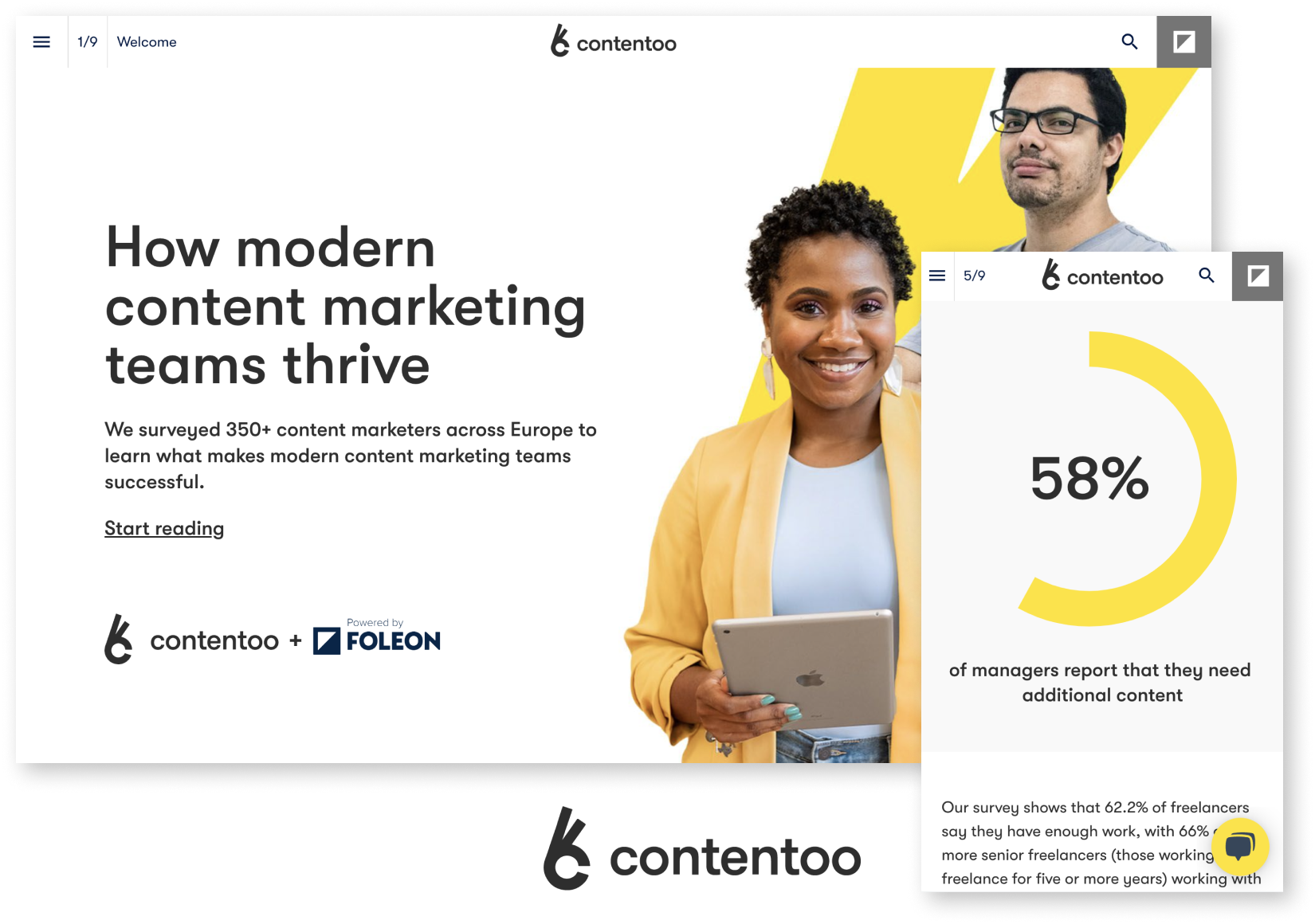
Example: Contentoo is a platform connecting content marketers with freelance talent. It created an interactive report based on insights from over 350 content marketers across Europe. The report features dynamic data visualizations, mid-gating elements, and chatbot interactions, making the content more engaging and informative.
How to make your ToFu content interactive:
- Start with your hero content. Turn a static infographic into an immersive experience where users can navigate to information most important to their stage of the buyer journey.
- Slice a broad whitepaper into a guided questionnaire with “next” logic.
- Avoid gating upfront. Allow prospects to unlock content gradually, using mid-gating, rather than forcing them to subscribe to something as soon as they arrive.
Top tip: Create interactive white papers that generate better leads.
Middle of funnel: Consideration
At this stage, companies use static practices like case studies, slide decks, comparison sheets, and long-form PDF guides. For an interactive funnel approach, convert them to interactive success stories that let prospects navigate through sections they care about, like product tours, scenario calculators, and guided decision tools that help users choose the right solution based on their needs.
Why this matters in the middle:
- At this stage, prospects are evaluating you versus your competitors. They don’t want a static pitch. They want something that differentiates you from your competitors.
- Interactive stories allow them to click through the paths relevant to their context. E.g., “If you’re in manufacturing, click this case; if not, click here.”
- Tours or guided selectors like a short “Find the best plan for you” tool that asks a few questions and recommends the right option, and lets them explore features in a personalized way.
Example: ScottMadden is a management consulting firm. They created an interactive report examining the growing need for investments in energy infrastructure. The report includes interactive graphs and charts that allow users to explore data in a more engaging way.

How to make your MoFu content interactive:
- Use web-based publications to build an interactive narrative around your product and collect rich data on how users engage with your content.
- Convert your best case studies into interactive pages where people choose “show me ROI, show me implementation, or a customer story.”
- Embed interactive elements like quizzes, polls, and clickable infographics that engage readers by offering a more participatory experience.
Bottom of funnel: Decision
The static approach used at this stage includes price sheets, proposal PDFs, feature comparison tables, and request-a-quote forms. Transform the approach to an interactive one by using ROI calculators, self-assessments, interactive proposals, configurators, and guided quote builders.
Why this level is critical:
- Buyers here need confidence. They should not have any doubt about your brand before buying.
- If they can confirm that the offer pays off by inputting their own metrics, your conversion is unshakable.
- It’s not about telling; it’s about enabling prospects to discover your solution for themselves.
Example: At Foleon, we built an interactive sales proposal to demonstrate how our customers can design more engaging and visually appealing proposals. It’s a model that shows the level of interactivity, structure, and professionalism you can achieve without relying on static PDFs.
How to make your BoFu content interactive:
- Build a guided quote builder with logic (e.g., “if you choose plan A, these extra features show”).
- Add trust signals: certificates, industry badges, security seals, and client logos.
- Offer a downloadable and interactive proposal with clickable fields instead of a static PDF.
- This is the stage where you might embed affiliate conversion tracking for partners who influence a deal. If you have affiliates, the interactive proposal or calculator can embed tracking links or codes to ensure attribution at purchase.
Best practices to make your interactive funnel work
An interactive content funnel should be smooth, trustworthy, and provide your prospects with real value. Here are some best practices to help create a seamless experience for your prospects.
Keep it clear
Clarity should always beat decoration. Interactive content is engaging by default, but overdoing it with animations or overly complex designs can overwhelm users.
Track and improve
The beauty of an interactive funnel is its insights. Every click tells you something. Treat this as a live feedback loop. Based on that data, test, refine, and optimize your strategy.
Foleon’s interactive content platform offers powerful, built-in analytics that track specific user actions — who interacted, where they clicked, and duration of engagement — and automatically feed these crucial insights into your CRM to score leads and personalize follow-ups. For deeper analysis, it integrates with platforms like Google Analytics for behavioral data. To ensure your interactive content calendar is resonating in different contexts, platforms such as Planable provide cross-channel analytics, offering a holistic view to help you maximize the impact of your messaging everywhere.
Your funnel is only as strong as its integration. Make sure your interactive experiences sync with your CRM and marketing automation platform, so valuable insights aren’t lost. Tools like Foleon make this easy by offering native integrations with major CRMs and MAPs and ensuring all engagement data flows directly into your existing workflows.
For example, if a lead fills out a product quiz, their responses should feed directly into a tool like Salesforce, GetResponse, or HubSpot. That way, the sales team knows what features caught their attention.
Build trust into the design
Only engaging interactions are not responsible for closing deals. Engagement is important, but it isn’t enough on its own to close a deal. Buyers need assurance that you’re credible. Add testimonials, security badges, and visible certifications right inside your interactive assets.
In some industries, you can even create digital certificates that appear within proposals or product tours. This shows proof of compliance or expertise in a format prospects can immediately recognize and trust.
Design for all screens
Many users will engage with your content across various devices, so be careful to always create content with a mobile-first design. If your interactive quiz or calculator doesn’t fit on a mobile phone, you lose them instantly.
Many users will enter your funnel on mobile. If your interactive quiz or calculator doesn’t fit on a mobile screen, you lose them instantly. With Foleon, every piece of content is automatically responsive, ensuring it adapts smoothly to any device without requiring extra effort from your team.
The benefits of an interactive funnel
A static funnel fails to move prospects because it doesn’t respect how humans think and explore.
An interactive content funnel, on the other hand:
- Turns passive readers into active participants: People just don’t come and read; they interact with your content.
- Replaces ugly forms with natural data collection: you get data in context without feeling invasive.
- Builds trust faster: the users try, test, click, and see value by exploring everything.
- Speeds up decision-making: buyers get clarity on their own terms.
Where Foleon fits in
The good news is you don’t need to hire more designers or developers to build your interactive content funnel from scratch. Platforms like Foleon make it accessible to marketers to build interactive content without coding.
How? With the help of:
- Templates for digital reports, interactive brochures, magazines, and presentations that integrate seamlessly into your marketing stack so that you can track the ROI of your content marketing.
- Built-in analytics and behavior tracking so you can see where people click, drop off, or engage.
- Dynamic elements (hotspots, tooltips, branching logic) that let your content adapt based on user input.
Creating your interactive content funnel: Bonus examples
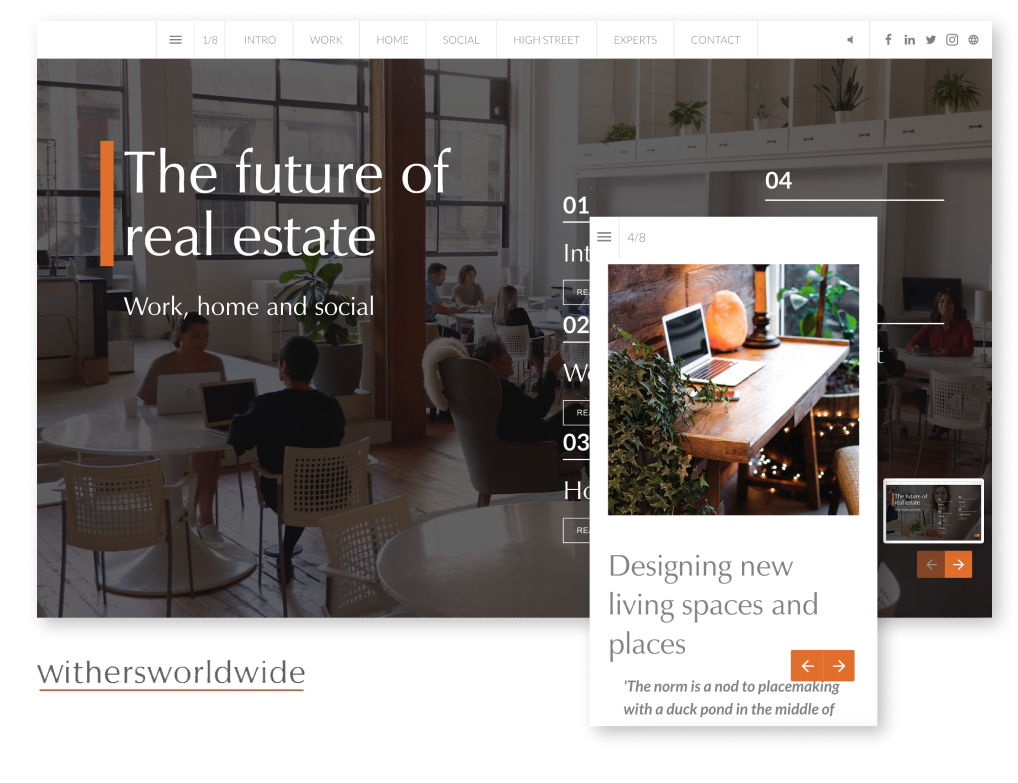
Law firm Withersworldwide created an interactive report exploring the evolution of the real estate industry. The report features dynamic data visualizations, embedded videos, and interactive elements that allow readers to delve deeper into specific topics.
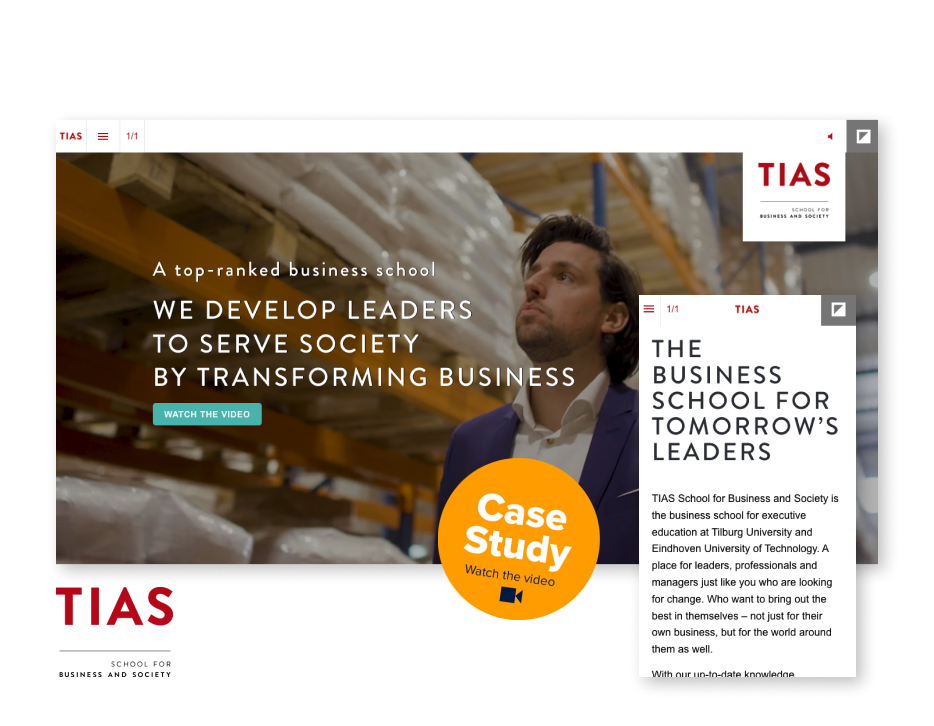
TIAS Business School developed an interactive digital brochure showcasing its diverse programs. The brochure includes interactive features, such as clickable program details, embedded videos, and dynamic navigation. This provides students with an immersive overview of what TIAS offers.
Curious about their results? Check out the full success story.
 Bringing it all together
Static funnels are fading as audiences expect more than passive content. To capture attention and guide prospects effectively, marketers need to provide user experiences that engage, inform, and elicit responses in real time.
Interactive content funnels drive higher engagement, provide deeper insights, and help in driving buying decisions. The best part is you don’t have to rebuild your entire b2b content marketing funnel.
Starting with even a single interactive asset can deliver noticeable results and set the stage for scaling smarter.
Meet Foleon
Unlike PDFs, Foleon Docs unlock insights about your audience, individual contacts, and content performance.

Richa is a Content Marketing Specialist with over 7 years of experience. She has worked with various SaaS brands to create content strategies that boost organic traffic and generate qualified leads. She loves testing different strategies to increase engagement and build brand awareness. When she's not coming up with new ideas, she enjoys reading novels or playing games on her PlayStation.
Want to write for the Foleon blog? Here's how to submit a guest post.