At the bottom of a B2B funnel, you have warm prospects who already understand their problem and the available solutions. Typically, they’re procurement teams, department heads, or executives with budget authority who need final reassurance before committing.
At this stage of the content marketing funnel, they’re focused on ROI, trust, and risk reduction. They want proof that your solution delivers, integrates smoothly, and outperforms alternatives.
Think of bottom-of-funnel potential customers as coins wobbling on the rim of a barrel — teetering, ready to drop. Your content is the gentle nudge that tips them into your corner. Every touchpoint of marketing collateral should build confidence, answer objections, and remove the kind of last-minute doubts that can sabotage a deal.
The more you frame the decision as logical, low-risk, and high-reward, the easier it is for them to say yes. In this piece, we’ll explore the types of bottom-of-funnel content (BoFu content) that can seal the deal and bring home that sweet, sweet sale.
Case studies and success stories
This is arguably the most powerful type of BoFu content. Prospective buyers at this stage of the funnel need social proof, so the best thing you can do is show them real people — just like them — who achieved the results they’re after.
To drive the sale home, be specific using clear metrics and before/after scenarios. When it comes to B2B buyers, it’s best to think in terms of ROI, so present your results with clear business outcomes. For example:
- Comhar Partners Cuts Content Creation Time By 75% With Personalization
- Vitality Produces 4x More Content By Going Digital
- KBR Achieves Global Content Consistency and Cuts Content Publish Time by 82%
Now, case studies may not be the most exciting thing to read over your lunch break. So, we asked Edward White, who is an actual master in storytelling and the Head of Growth at beehiiv, about making your case with, well… case studies.
“When you’re speaking to bottom-of-the-funnel customers, facts and features alone won’t close the deal, but stories will. Case studies are where the abstract becomes tangible, where prospects can see themselves in the success of others. At beehiiv, we’ve turned case studies into an art form by painting a clear picture of what’s possible. That’s what gives buyers the confidence to take the leap,” he shared.
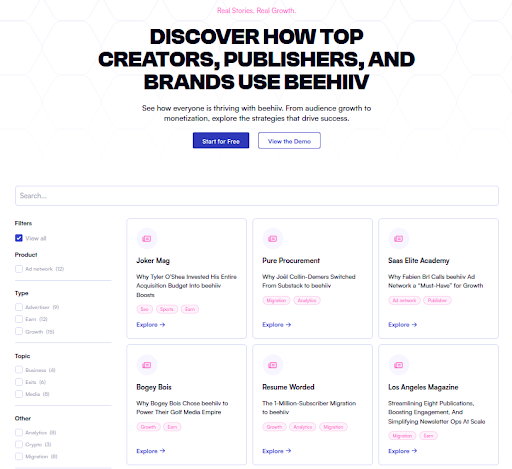
The team at beehiiv put together a wide selection of case studies
In short, be creative with your data — but never lose sight of what truly matters: the results. There’s a reason more than 73% of B2B companies rely on case studies in their marketing. It’s not about bragging rights; it’s because nothing builds credibility faster than real-world proof.
Lead generation offers
Another way to boost your B2B content strategy for bottom-of-funnel customers is to let them see the goods in action.
You do this with the help of demand generation content like free trials, demo requests, walkthroughs, or webinars. This type of bottom-of-funnel content is crucial for driving action and converting prospects into customers.
It’s an effective way to address any final objections and build confidence in your product or service. A free trial or personalized demo allows the prospect to test the solution for their specific needs, providing firsthand proof of value before they commit money.
On the other hand, a demo request or free consultation allows you to address a prospect's unique pain points and objections directly, showing exactly how the solution works for their specific business context.
Stanislav Khilobochenko, VP of Customer Services at Clario, says :
“A meaningful trial removes friction, and doesn't add it. It should guide people toward clarity, not overwhelm them with configuration. The best lead generation experience makes the customer feel supported, understood, and more confident than they were when they started.”
Here are a few tips to make your lead generation offers as convincing as possible:
- Show the product solving their problem. Create a personalized demo that fits the prospect’s industry, use cases, or pain points.
- Highlight ease of use. Walk them through how simple it is to set up, integrate, and actually use.
- Keep it brief. Attention spans at this stage are shorter than you think. Aim to impress in 15-20 minutes, then leave time for questions.
- Leave them with proof. Give them a recording, an interactive sandbox, or a trial so the experience doesn’t end when the demo call does.
Extra tip: Don’t let the trail go cold after the demo presentation, and don’t wait for your prospects to get back to you. Keep the energy and excitement from a great sales demo going by following up with a series of personalized, well-targeted emails.
According to Epsilon, 80% of buyers are more likely to be persuaded by a brand that takes personalization seriously. And with instant personalization, you can deliver tailored content experiences at scale without too much extra effort.
Foleon, for instance, allows you to use what you know about your contacts — names, job titles, industries, or anything else — to generate unique versions of your Foleon Doc for each contact or company.
You don’t have to create multiple documents for different audience segments. You can have a general template and only change the information on specific pages. This way, your newsletters, proposals, brochures, or reports will change depending on the person reading them.
ROI calculators and cost-benefit tools
At this stage, decision-makers are often focused on justifying cost. Make their job easier by offering ROI calculators, templates, visually-appealing reports, or benchmarks that clearly demonstrate value.
Fineas Tatar, the Co-CEO at Viva, said it better than we ever could:
“When it comes down to it, the final decision is always a financial one for business leaders. If the budget isn’t there or the payoff isn’t worth it, it doesn’t matter how well you can build relationships or pitch to your prospects.
Your bottom-funnel content is your last chance to pitch and leave a great impression, so it should be your best. Build it on numbers and legitimate, relevant use cases. Try building out ROI calculators that let a prospect plug in their own team's numbers, pricing comparison guides, and case studies with hard, backable data.
We help leaders manage budgets and control costs, so we know they aren't looking for features — they're looking for a return on investment. They aren't buying pretty features, but a business outcome they can rely on. Your content has to deliver on that justification.”
Comparison guides
Your offer will inevitably be compared with your competitors’ — there’s no escaping it. The real question is: do you know which competitors are most likely to one-up you?
You can find out! Your prospects are typing queries like "[Your Brand] vs. [X Brand]” or “[Your Brand] alternatives" into Google and other search engines every single day. Use a high-powered keyword tool, like Semrush’s, to discover the exact phrases you can use to boost your visibility even in comparisons.
To take things one step further, once you know which competitors are the most “dangerous,” you can create your own comparison guides, which are another example of great bottom-of-funnel content.
In a “Why choose us vs. XYZ Brand” guide, you can compare features, pricing, ROI, integration capabilities, support, or any metrics that align with the buyer’s priorities. Just make sure you know what the buyer is prioritizing.
According to Ken Chartrand, CEO of Encore Business Solutions,
“When a company acknowledges a competitor’s strength instead of hiding it, it signals operational maturity. In leadership, you trust the partner who understands their limitations and still outperforms where it counts.”
Also, make it pretty. Use visuals like tables, charts, or side-by-side checklists to help readers draw a favorable conclusion.
The Zendesk vs. Freshdesk guide is a great example of how comparison can be done elegantly and transparently. The guide uses visuals, tables, and clear data to showcase Zendesk’s main benefits without burying Freshdesk’s strong points.
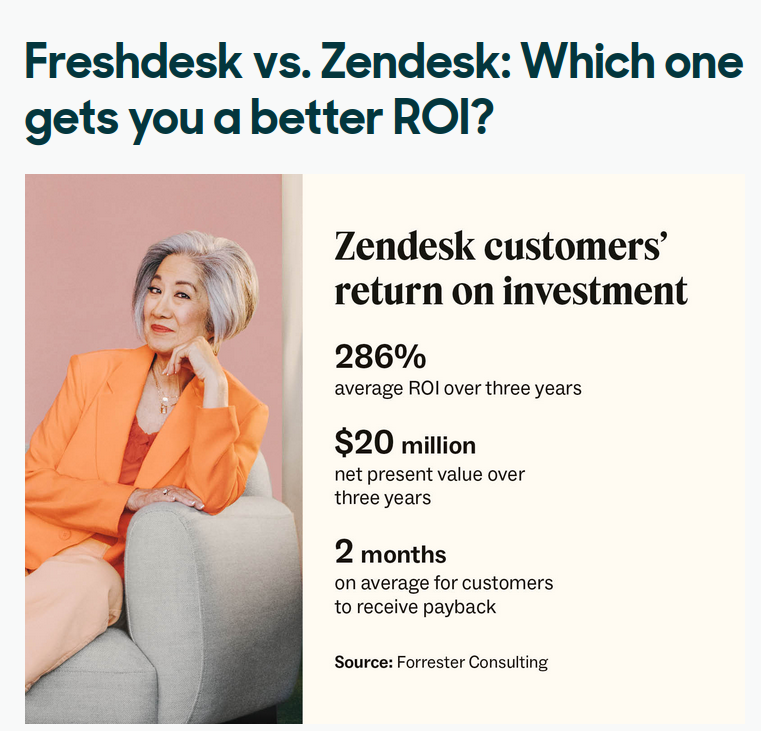
From the Zendesk vs. Freshdesk comparison
In short, you should be honest and clear. Don’t just highlight your strengths; acknowledge where competitors might excel. Transparency builds trust, and buyers can spot exaggeration from a mile away.
Customer reviews and testimonials
By the time your B2B prospects reach the bottom of the funnel, they’ve heard the “we’re the best” messaging from you and countless other vendors. From this point forward, they want social proof from customer reviews, testimonials, peer references, and independent ratings.
This is why it’s essential to have a solid user-generated content strategy that provides you with a variety of quotes, testimonials (classic or video), and customer reviews. These pieces of content take your claims out of marketing-speak and put them in the mouths of real people your prospects trust.
But it’s not enough to just have these pieces of user-generated content. You also have to make them as visible as possible. After all, you want to make sure no one misses how much existing customers and business partners appreciate your brand, right?
Include reviews, quotes, and testimonials on landing pages, near calls-to-action, or in sales decks to reinforce trust right when the buyer is making a decision. Highlight measurable outcomes — quotes that show concrete results, such as increased revenue, saved hours, or improved efficiency, carry far more weight than generic praise.
Lastly, use multiple formats. Video testimonials, written quotes with headshots, and case study snippets all add credibility. Video, in particular, humanizes your product and makes it harder to ignore.
Create interactive BoFu content that’s anything but boring
No one wants to read flat, text-heavy PDFs that would put even the fussiest toddler to sleep. So why would you do this to your leads?
Sure, reports, case studies, brochures, and even comparison guides often include lots of data. It’s how you show possible business partners you are reliable and trustworthy. But no one said bottom-of-funnel content (BoFu content) must be boring.
Content creation platforms like Foleon make it easy for your teams to create high-impact digital documents that keep readers engaged and interested, from awareness content to BoFu deal-closers.
Interactive BoFu content example: Contentoo
Take Contentoo, Europe's leading platform for content marketing talent. Using Foleon, put together a great interactive report on how modern content marketing teams thrive (based on insights from 350+ content marketers across Europe).
What makes this report special is its intelligent use of mid-gating and chatbots, and data visualizations to make it more engaging. 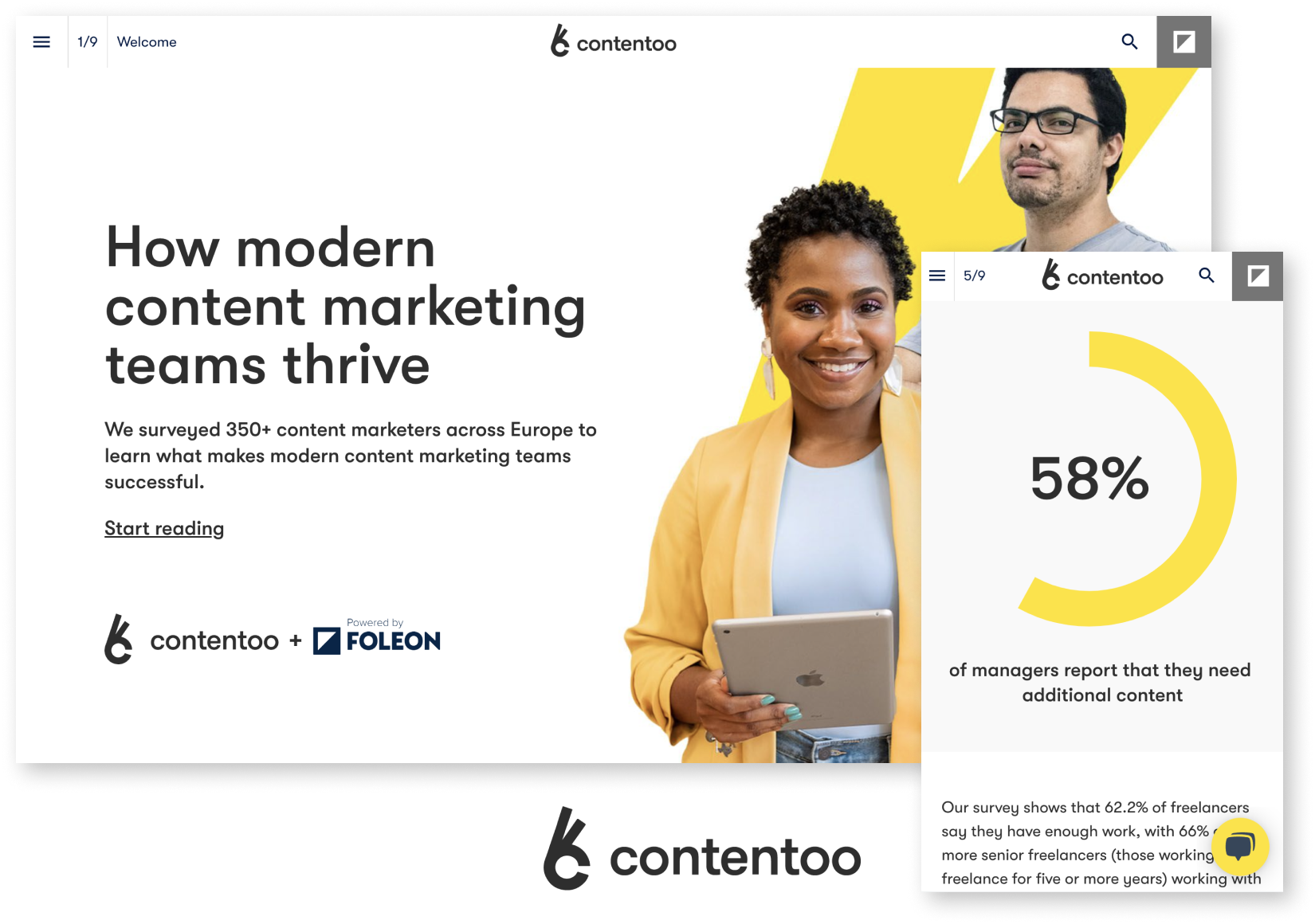
Interactive BoFu content example: BMW x Juice
When it came to launching their new 1 Series, BMW also wanted to create a digital experience that matched the vehicle’s innovation, quality, and energy. They trusted Juice agency to bring this idea to life, in partnership with Foleon.
Juice made the most of Foleon to create a digital brochure that delivered on every front: beautifully designed, easy to navigate, and with a custom-built dimensions comparator tool that lets customers visually compare the new 1 Series to its predecessor. A great example of BoFu content done right.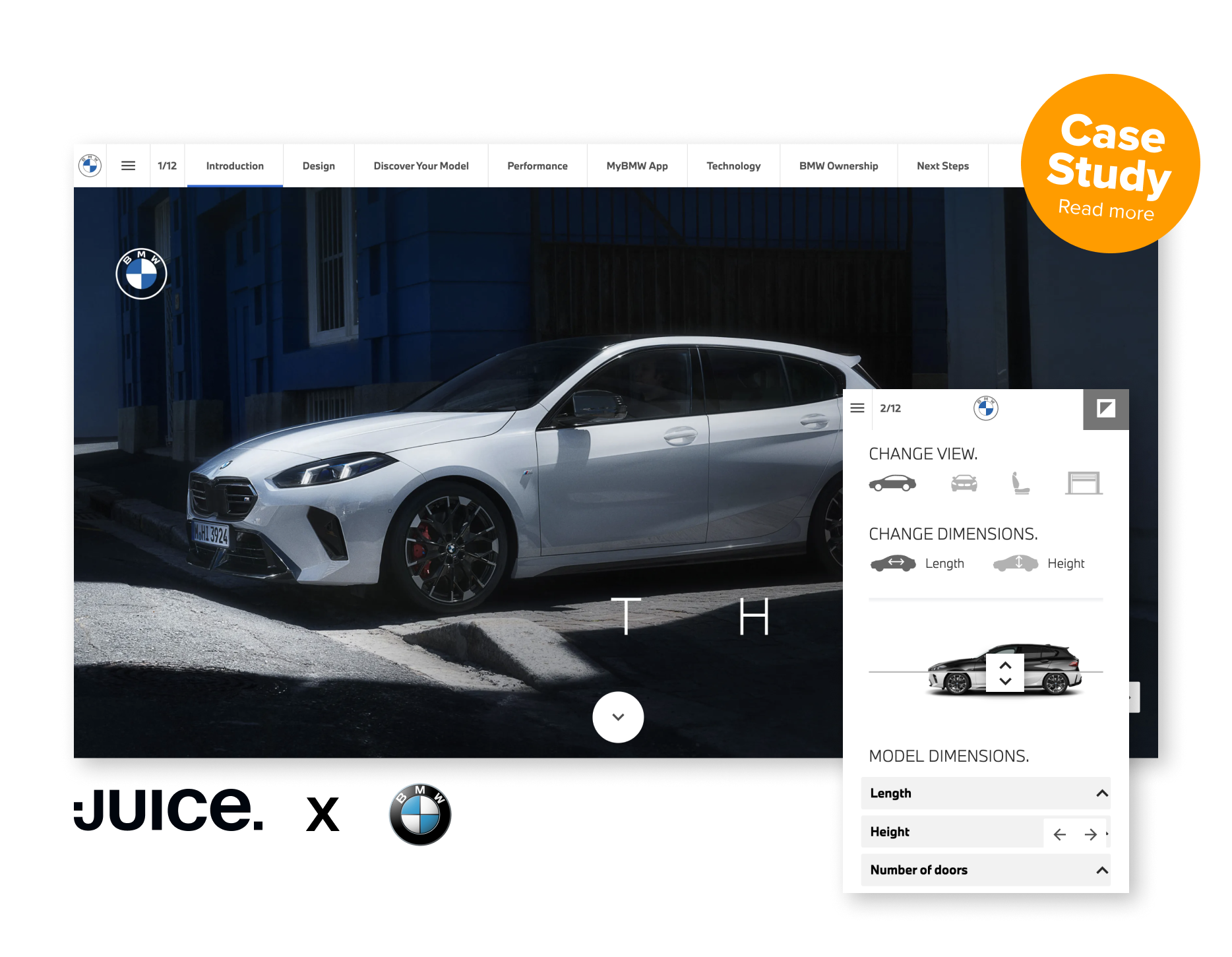
Curious what went into creating this piece? Check out the full success story here.
Why tracking BoFu content is non-negotiable
Your BoFu assets can lead to one of two results: a signed contract or a lost opportunity. Here, the number of signed new contracts is proof of the Return on Investment (ROI) of the content strategy and can be used to justify future budget requests. You should be able to draw a line between how your digital BoFu asset performs and your revenue.
However, traditional document formats like PDFs don’t give you enough insight into your target audience’s mind. Usually, all you know is the number of downloads, which is not very useful.
With Foleon’s analytics, the situation changes — our platform shows you who opened and read a document, the most common exit points, the most visited pages/sections, and much more.
By tracking metrics like Conversion Rate and Exit Rate on BoFu pages, you know the exact moment when a prospect loses confidence. Use this information to optimize the content and adjust your strategy.
Also, knowing which case studies or feature comparisons a specific lead downloaded or viewed gives you insight into the prospect's primary pain points and competitors they may be considering. Use it to personalize your pitch and address objections.
Wrap up
Turning bottom-of-funnel B2B prospects into loyal customers is part strategy, part storytelling, and a sprinkle of finesse. At this stage, it’s all about proving value, reducing risk, and building trust.
Use all the tools at your disposal, be it case studies, demos, comparison guides, or social proof, to turn abstract promises into real-world results. Do it right, and you won’t just close a deal, you’ll create loyal advocates who keep coming back and advocating for your brand.
Meet Foleon
Unlike PDFs, Foleon Docs unlock insights about your audience, individual contacts, and content performance.

Brooke Webber is a marketing strategist focused on people-first branding, employee engagement, and workplace psychology. She blends data and empathy to craft campaigns that connect, convert, and inspire action.
Want to write for the Foleon blog? Here's how to submit a guest post.