
Why do thought leadership ads work?
Thought leadership ads on LinkedIn are sponsored posts built around a real person’s expertise, not polished brand copy. Instead of pushing a product, they push a perspective, usually through a founder, executive, or subject matter expert with something credible to say.
That is what separates them from traditional B2B ads. Standard ads sell. B2B thought leadership ads teach, challenge, or reveal something worth paying attention to. On a platform where people come to learn from peers, that lands better. It feels more native, more trustworthy, and far less like an ad.
The format has been around since 2023, but very few brands are using it well. Here are the examples worth studying, and why they work.
Alice de Courcy and Cognism's CMO Diary
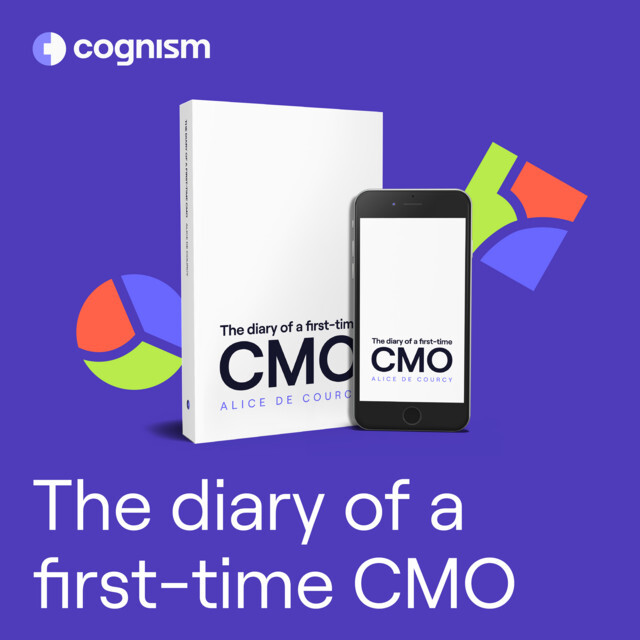
This one's the gold standard right now. Alice de Courcy, Group CMO at Cognism, has been documenting her journey scaling the company from $5M to past $50M ARR in a series called Diary of a First-Time CMO. What started as honest LinkedIn posts turned into a book, a podcast, and eventually one of the most referenced B2B content plays on the platform.
Cognism now sponsors her posts as thought leadership ads, and the results are measurable: LinkedIn thought leadership ads were responsible for 35% of Cognism's influenced pipeline at one point in 2024.
That number is remarkable because the posts themselves don't sell anything. Alice writes about decisions she got wrong, strategy pivots she had to make, and what it actually feels like to rebuild a marketing function from scratch. The ads feel like entries from someone's private notebook, and that's the point.
What makes it replicable in theory (but hard in practice) is that Alice puts the content into her own words. She works with her team on structure and outlines, but the actual voice stays hers. The moment that changes, the whole thing collapses.
Chris Walker and the Anti-MQL Playbook
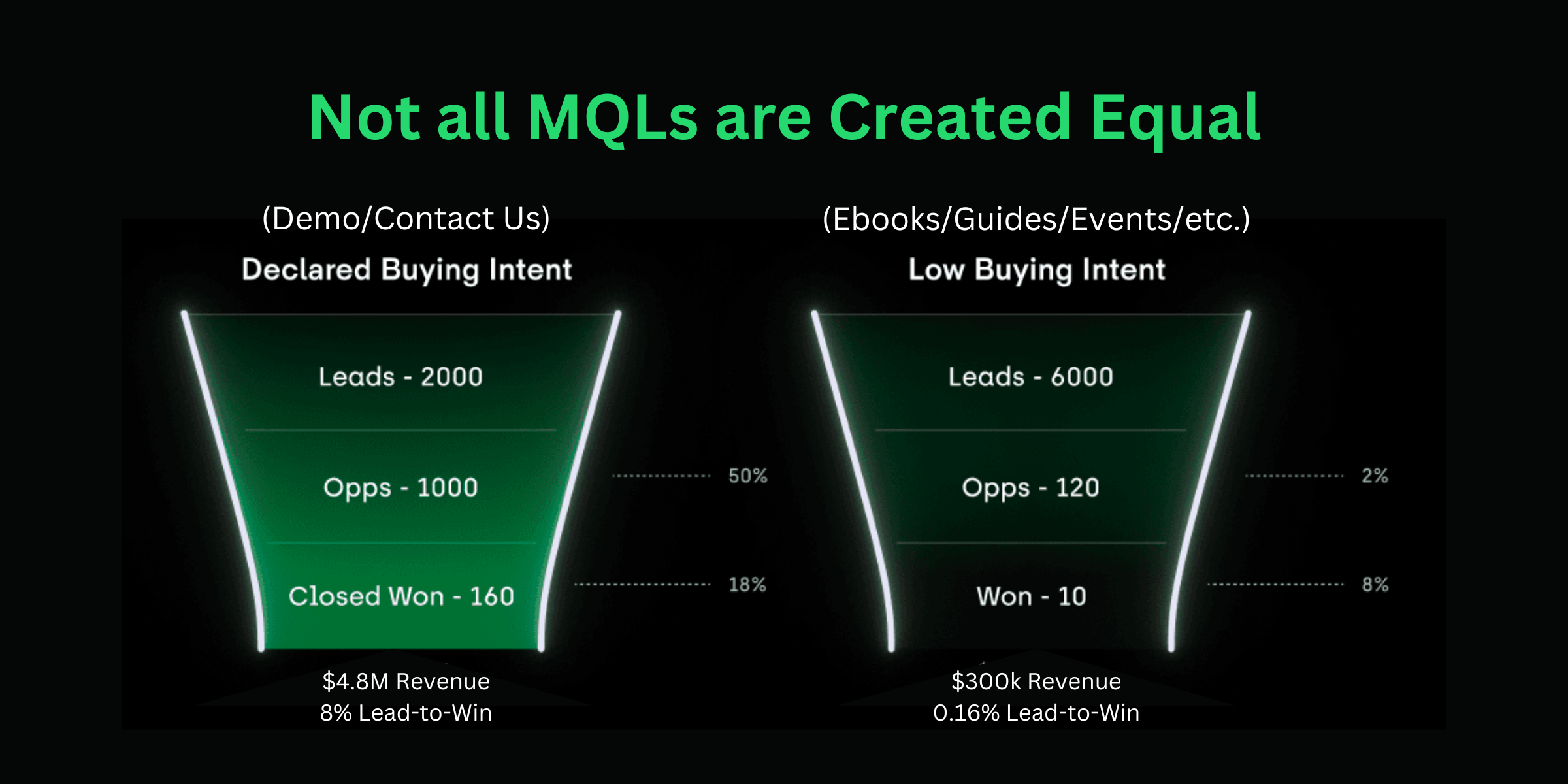
Chris Walker built Refine Labs into an eight-figure agency almost entirely on LinkedIn content, and his approach became a case study in using organic thought leadership as a demand engine before the paid amplification format even existed.
His posts challenged the core assumptions of B2B marketing: MQLs are broken, gated content is self-defeating, and most attribution models are telling companies the exact wrong thing.
By measuring their LinkedIn ROI through self-reported attribution rather than multi-touch, Refine Labs was able to track $50MM in HIRO pipeline and $14MM ARR in closed-won revenue over two years.
Using standard multi-touch attribution, that same activity would have shown $977k, a 93% lower number. Walker posted that comparison publicly, and it went everywhere. That's the kind of content that works when you sponsor it: a concrete finding, a named methodology, and a specific number that makes people stop and recalculate their own assumptions.
He's since moved on from Refine Labs, but the playbook he built is still what everyone in B2B demand gen references when they talk about LinkedIn done right.
Exit Five and the B2B Email Roast
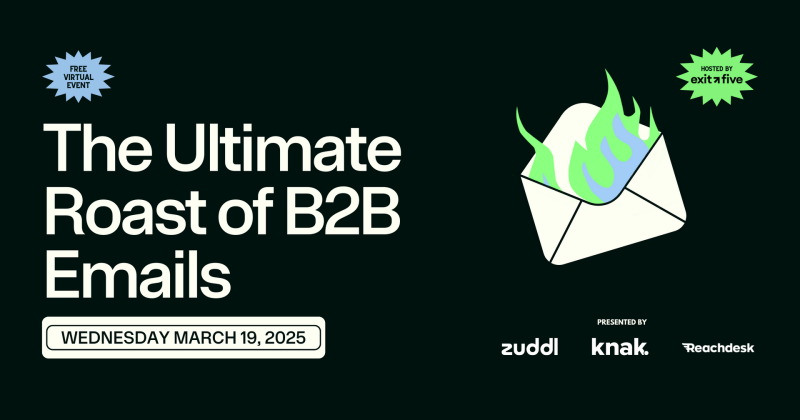
Dave Gerhardt's Exit Five community knows how to turn a LinkedIn moment into a full campaign. In March 2025, Exit Five hosted "The Ultimate Roast of B2B Emails," a virtual live event where 15 top B2B marketing experts, including Amanda Natividad, Alex Lieberman, and Danielle Messler, spent a full day critiquing real marketing emails. LinkedIn
The promotion around it was exactly what you'd run as a thought leadership ad: individual posts from the participants, in their own voices, talking about why bad B2B email exists and what they'd do differently. Each post functioned as a standalone piece of content while building anticipation for the live event.
Exit Five built a marketing campaign complete with a countdown clock on LinkedIn and a lineup of people who each came with their own audiences. The ad format fits this perfectly because every participant's post could be sponsored independently, reaching different segments through different trusted voices.
The reason it worked is the same reason a good panel talk works. There's inherent social proof in who shows up. When multiple respected people agree that something is worth their time, that's more persuasive than any copy a brand could write about itself.
Will Allred and Lavender's Email Teardowns
Lavender makes email coaching software for SDRs. Their co-founder, Will Allred, has spent years on LinkedIn doing one thing extremely well: taking real cold emails and tearing them apart line by line. He'll take an email someone sent him, tear it apart, and explain exactly where it lost him and why.
When Lavender sponsors these as thought leadership ads, they don't change anything. There's no product mention inserted, no CTA grafted onto the end. The ad is just Will being Will: direct, a little harsh, and genuinely useful. The product earns its credibility by association rather than by announcement. If the guy who coaches people on email works at Lavender, the implication takes care of itself. It’s meme marketing turned into quality B2B marketing.
The video format matters here, too. Thought leader ads have a 1.7x higher click-through rate and a 1.6x higher engagement rate than other single-image ads, and video compounds that. Something shot on a phone with natural lighting outperforms produced studio content consistently because produced content signals "ad" before anyone reads a word.
What Separates These From Everyone Else
The companies above all figured out the same thing, just from different directions: the content has to have a life before the ad budget touches it. You can have the best financial strategy to optimize your ad spend, but it’s all for naught if the content itself doesn’t have soul.
When an organic post generates a lot of attention, doubling down on it with a paid ad is how the best campaigns get built. The ad serves as the scaling tool for the already established credibility.
The companies that struggle with thought leadership ads are the ones trying to manufacture the organic part. They brief executives on what to say, polish the language until it loses its voice, and then wonder why it performs like branded content. Because at that point, it is branded content.
Final Thoughts
There's a pattern across every example here that's hard to argue with: the content existed before the budget did. Alice's diary was a real documentation habit. Chris Walker's takes were genuine convictions he'd been arguing in public for years.
Will Allred's teardowns came from how he actually talks about email. When the ad format arrived, these people had something real to amplify. If your company is starting with the ad objective and working backwards to find a voice, that's the problem. Build the voice first, then turn on the spend.
Foleon Guide
Marketing Power Plays
Whether you're in content, comms, or demand gen, here are some novel tactics from Foleon’s Marketing team.


Magnus Eriksen is a copywriter and an eCommerce SEO specialist with a degree in Marketing and Brand Management. Before embarking on his copywriting career, he was a content writer for digital marketing agencies such as Synlighet AS and Omega Media, where he mastered on-page and technical SEO.
Want to write for the Foleon blog? Here's how to submit a guest post.

.png?width=854&name=Blog_%20Innovative%20branded%20content%20(3).png)