![foleon_logo_white.png]](https://www.foleon.com/hs-fs/hubfs/foleon_logo_white.png?height=40&name=foleon_logo_white.png)
💡 Any content creator can add a Module to a page, but only Admins and Designers can create and edit Modules.
⚠️ Global Content Modules are not available on all plans, and the number of Modules you can create depends on your plan. If you're interested in using this feature or increasing your Module limit, contact us here.
In this article
Why use Global Content Modules?
%20content.png?width=670&height=291&name=Global%20(linked)%20content.png)
Let's look at an example:
Where to create your Modules: Brand Console or Workspaces
You can create and manage Modules in two places: the Brand Console or individual workspaces. Where you create your Modules depends on how much control or flexibility your team needs.
💡 Not sure where to create your Module? We recommend starting in the Brand Console for better visibility and control.
⚙️ Brand Governance Settings
Your brand governance settings control whether Modules can be created in workspaces or only in the Brand Console. Admins and Designers with access can choose to allow or restrict Module creation at the workspace level.
Brand Console — for centralized content and design
Create and manage Modules from the Brand Console when you want tight control over the content and design that is created for your Modules:
- Only Admins and Designers with access to all workspaces can access the Brand Console
- Modules created here can be assigned to one or more workspaces
- Workspace users can use these Modules in Docs, but cannot edit them
➡️ Examples of when to create your Module in the Brand Console:
- You have strict content requirements and want centralized control over the content that is created for modules (for example, for pricing pages or company information)
- You have a central design team that is responsible for creating content for multiple teams
-
Modules need to be shared across multiple (or all) workspaces
💡 Do you want to limit module creation to the Brand Console only? You can configure this in your brand governance settings.
Workspaces — for localized flexibility
Create and manage Modules from individual workspaces when you want teams to have more flexibility or autonomy over their content:
-
Workspace-level Admins and Designers can create and edit Modules within their workspace
-
These Modules are only available within the workspace where they were created
- In the workspace, Modules are labeled by origin — either Brand Console or Workspace
➡️ Examples of when to create your Module in a Workspace:
- Each regional or functional team is responsible for its own content.
- You want teams in different workspaces to create local variants of a module.
- Workspaces need to create modules quickly, without central oversight
💡 Workspace Modules are ideal when teams need to move fast, experiment with styles, or tailor content for their own purposes.
Use a hybrid approach
You can also choose to allow some Modules to be created at the workspace level, while others are created in the Brand Console. This is useful if you have centralized content, such as company information, that needs to be controlled centrally, while allowing Workspace users to create their own modules for their content.
How to create and use Modules
📹 In the video below, we show you how to create Global Content Modules and update content that syncs across multiple Docs.
Step 1: Create a Module
💡 Only Admins and Designers can create and edit Modules.
There are two ways to create a Module:
- from scratch, or
- from an existing block or page
To create a Module from scratch:
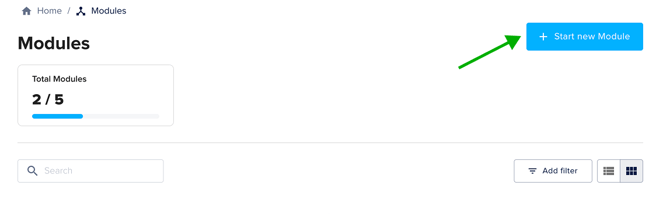
In the dashboard, go to the Brand Console or your workspace depending on where you want to create your Module. Open the Modules page and click + start new Module.
Give your Module a name and, optionally, select one or more categories. Click create.
The Module editor will open, where you can start designing your Module.
To create a Module from an existing block or page:
Choose what to save:
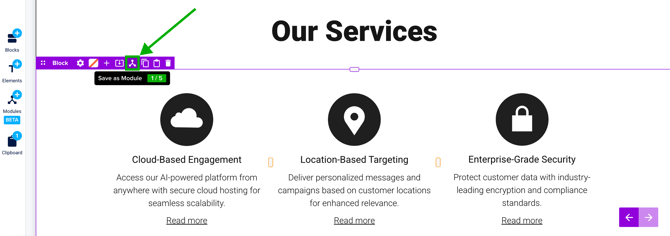
- Block: Hover over the block's purple settings bar and click Save as module.
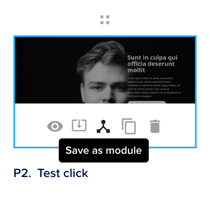
- Page: Click the page name to open the page overview. Hover over your page and click Save as module.
Admins and Designers with access to the Brand Console can save Modules straight to the Brand Console and choose which workspaces can use them.
- Click Save as module following the steps above.
- Enter a name for your Module.
- Select a category (optional).
- Select the checkbox if you want your Module to be public.
- Toggle on Save to Brand Console to save your Module to the Brand Console (optional).
- If you saved to the Brand Console, choose which workspaces can use it:
- Toggle on Assign to all workspaces to share it with every workspace.
- Select individual workspaces from the dropdown.
- Click Save.
⚠️ The original block won't be automatically converted into a Module. After finalizing your Module in the Module editor, you'll need to delete the original block and replace it with the new Module.
If saving a page as a Module: Go to the Pages overview, find the page, and click Save as module.
⚠️ If the page you want to save already includes a Module, you can save it as a new Module — but the existing one will be removed. In other words, you can’t nest Modules inside other Modules.
Give your Module a name and, optionally, select one or more categories. Click save.
💡 When saving content as a Module from existing content, the Module will be saved in the same workspace as the content. Follow the steps here to move the module to the Brand Console.
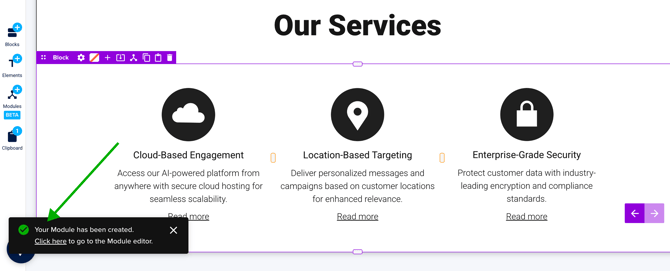
A pop-up will appear, directing you to the Module editor, where you can finalize your Module and make it public.
Step 2: Edit your Module
The Module editor allows you to create the content for your Module. A Module can contain multiple blocks, allowing you to create multi-block or full-page Modules for reuse across Docs.
Edit the Module as you would a page in a Foleon Doc:
- Use the copy to clipboard function to transfer content from existing Docs to your module
- Drag and drop blocks or templates onto your page
- Add and edit any elements into any block
- Create and link to overlay
You can add up to 10 overlays in your Module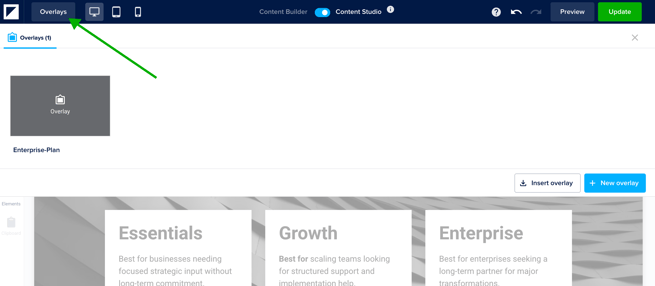
Step 3: Make your Module public
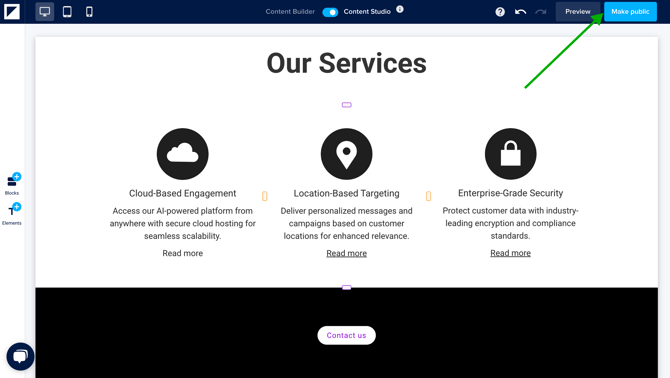
Once you've finished creating your Module, click make public to make the Module available for use in your workspace.
In the pop-up window, click Make public again to confirm.
⚠️ A module must be made public before it can be added to a Foleon Doc. If it’s not public, it won’t appear in the module library and won’t be available for use.
💡Did you create this Module in the Brand Console? Be sure to assign it to a workspace. It won't be available for use by workspace users until it's shared.
Step 4: Add a Module to a Doc
Once your Module is made public, you can start using it in your Foleon Docs!
💡 Any content creator can add a Module to a page.
Navigate to the Doc where you want to add the Module and open it in the editor.
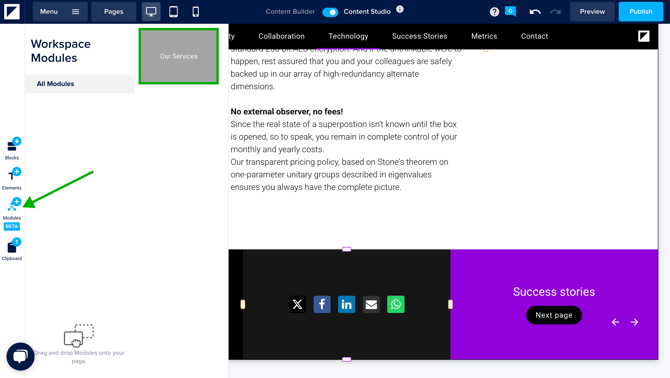
Click on Modules on the left sidebar. Drag and drop your Module onto the desired section of your page.
⚠️ Content in the Module is locked and cannot be edited. The Module can only be edited in the Module editor by Admins or Designers.
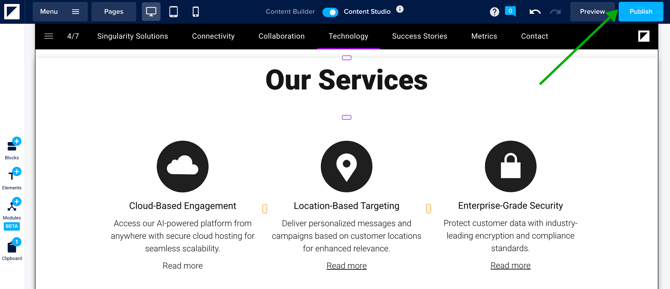
Once ready, click (re)publish to set the Doc live.
Duplicate or move a Module
You can duplicate Modules and move them between workspaces or to the Brand Console. This is useful if you want to:
-
♻️ Reuse a Module in a different workspace
-
🏢 Move a Module from a workspace to the Brand Console for centralized management
-
↔️ Move a Module from one workspace to another
To duplicate a Module, first navigate to the Module you want to copy or move. Click the quick actions menu (⋮) on your Module and select Duplicate.
If needed, rename the Module.
Under Workspace, choose where to copy the Module. You can choose either the Brand Console (recommended) or specific workspaces. Click Duplicate.
⚠️ Only Admins or Designers with access to the Brand Console can move the Module to the Brand Console.
💡 To manage your Module centrally, duplicate it to the Brand Console. You can then assign it to your workspace(s).
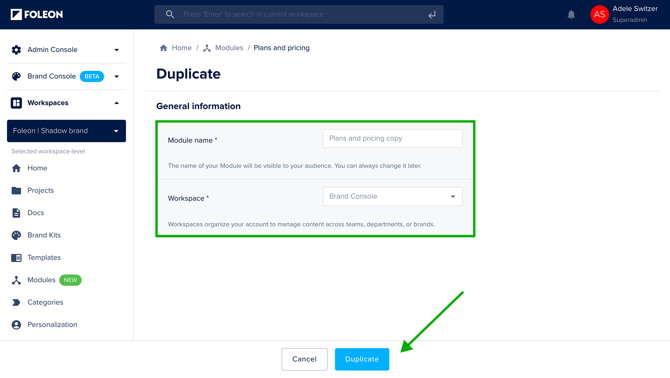
After duplicating, your new Module will appear in the destination you selected. If applicable, delete the original Module.
⚠️ If you want to move a Module to the Brand Console or another workspace, don't forget to delete the original Module. If you do not, workspace users will still be able to use the original, leading to confusion.
Assign a Module to Workspaces
Modules created in the Brand Console must be assigned to workspaces so they can be used.
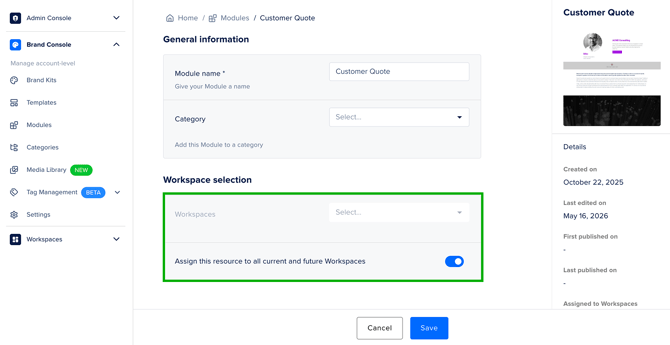
Open the Brand Console and go to the Modules tab. Click the quick actions menu (⋮) on your Module and select Settings.
Under Workspace selection, choose specific workspaces from the dropdown or enable the option to assign the resource to all current and future Workspaces. Click Save.
How to update a Module
In the dashboard, go to your workspace and open the Modules page. Click edit on the Module you want to update.
Make any necessary changes, such as modifying text, replacing images, or adding blocks. Once your content is ready, click update.
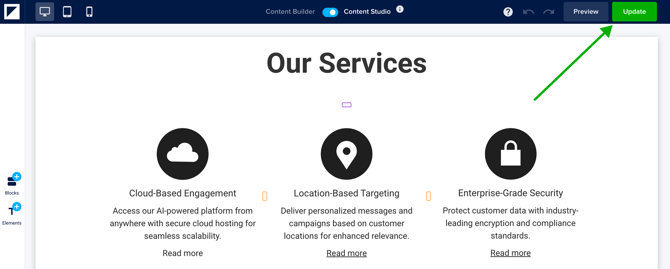
A pop-up will appear showing all Foleon assets that use this Module. This allows you to quickly check which Docs will be updated.
Click update to confirm. The changes will now be applied instantly across all Docs using the Module.
How to delete a Module
You may need to remove a module that's no longer needed in your workspace. Before you can delete a Module, you need to remove it from the Doc(s) where it's used in.
⚠️ The delete option will be disabled until the Module has been removed from all Docs.
In your dashboard, go to the Modules page in either the Brand Console or a workspace and find the Module you want to delete.
To check if your Module is still in use, check the green icon on the top right corner.
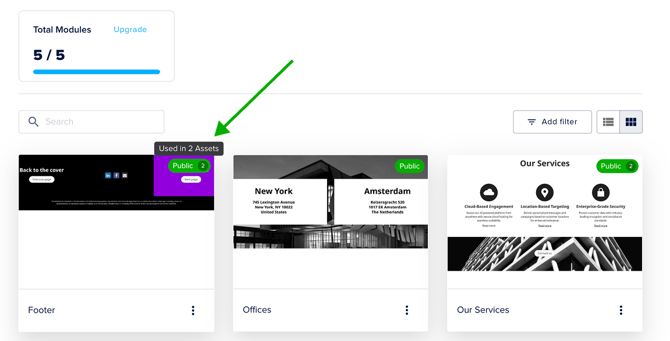
If your Module is in use, click the green icon to see an overview of all the Doc(s) where it is used. From here, open the content editor for each asset to delete the Module from your page.
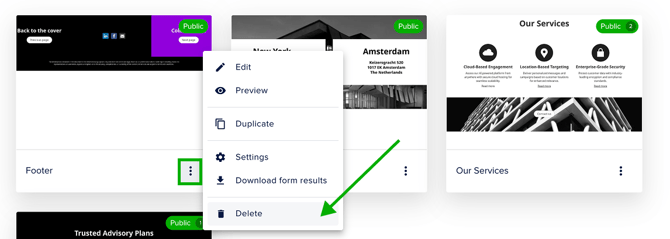
Once your Module is no longer in use, click the quick actions menu on your Module and click Delete.
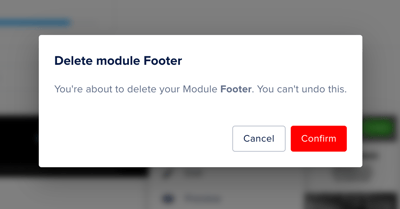
Confirm your action in the pop-up. Your Module is now permanently deleted.
How to embed a module
You can embed modules created in Foleon on external platforms such as websites or landing pages. This allows you to display interactive, branded pieces of content beyond your Foleon Doc.
📖 Learn more about embeddable content here
💡 Before you start: Your module must be published before you can generate an embed code. Learn how to create and publish a module.
- Open the Dashboard and go to Modules.
- Find the module you want to embed.
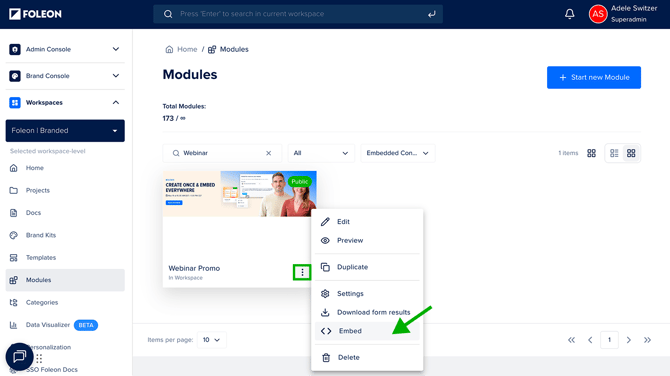
- Click the quick actions menu on the module.
- Select Embed.
- Select which Brand Kit should apply to the embedded module. This controls how it's styled on your website.
- Copy the embed code.
- Paste the embed code into your CMS or website platform.
✅ The module appears on your page in an iframe. Any updates you make to the module in Foleon are reflected automatically. No need to re-embed.
Add an accessibility title to your embedded module
Give your embedded module a title so people using screen readers hear what the content is before they reach it. This helps your website meet accessibility standards (WCAG).
- Open the Dashboard and go to Modules.
- Click the quick actions menu (⋮) on the module.
- Select Settings.
- Enter a title in the Title (Accessibility) field.
- Click Save.
💡 If you leave the field empty, the module name is used instead.